
Why do my knees feel stiff after sitting all day? Simple things that may help
"Why do my knees feel stiff after sitting all day, and what can I do about it?" Why long stretches of sitting leave knees feeling tight, easy desk habits to try, and when to check in with a professional.

The short answer: knees tend to feel stiff after sitting because they have stayed in one bent position for a long time. Moving more often is the simplest fix, and many people add gentle warmth and light pressure in the evening. If the stiffness does not ease once you get moving, or it comes with swelling, redness or pain, check in with a doctor or physical therapist.
“Why do my knees feel stiff after sitting all day?” is one of the most common questions from people with desk jobs, long commutes and long study days. This guide covers why it happens, a few habits that are easy to try, and when it is time to ask a professional.
Why do my knees feel stiff after sitting for a long time?
A few everyday things add up:
- One position for hours. Your knees stay bent while the muscles around them are barely working, so they feel tight when you finally stand.
- Awkward sitting. Crossed legs, feet tucked under the chair or a seat that is too low all change how your knees rest.
- Less movement overall. A long day with few walking breaks gives your legs little chance to loosen up.
This kind of stiffness is very common and usually eases once you start walking. If it does not, see the last section of this guide.
What can I do at my desk to help stiff knees?
- Change position often. Many physical therapy sources suggest getting up every 30 to 60 minutes. Stand, walk to refill your water, take a call on your feet.
- Set your seat up for your knees. Feet flat on the floor (or on a footrest), knees roughly level with your hips, and not crossed for long stretches.
- Straighten and bend gently. A few slow leg straightenings under the desk give your knees a break from one fixed angle.
- Add short walks. A few minutes before you sit down, at lunch and after work make a real difference to how your knees feel at the end of the day.
- Wind down with warmth. See the next section.


Does heat help stiff knees?
Warmth feels soothing and loosening, which is why many people reach for a warm shower or a heating pad at the end of a long day. It is a comfort habit rather than a cure, and it works best alongside moving more during the day.
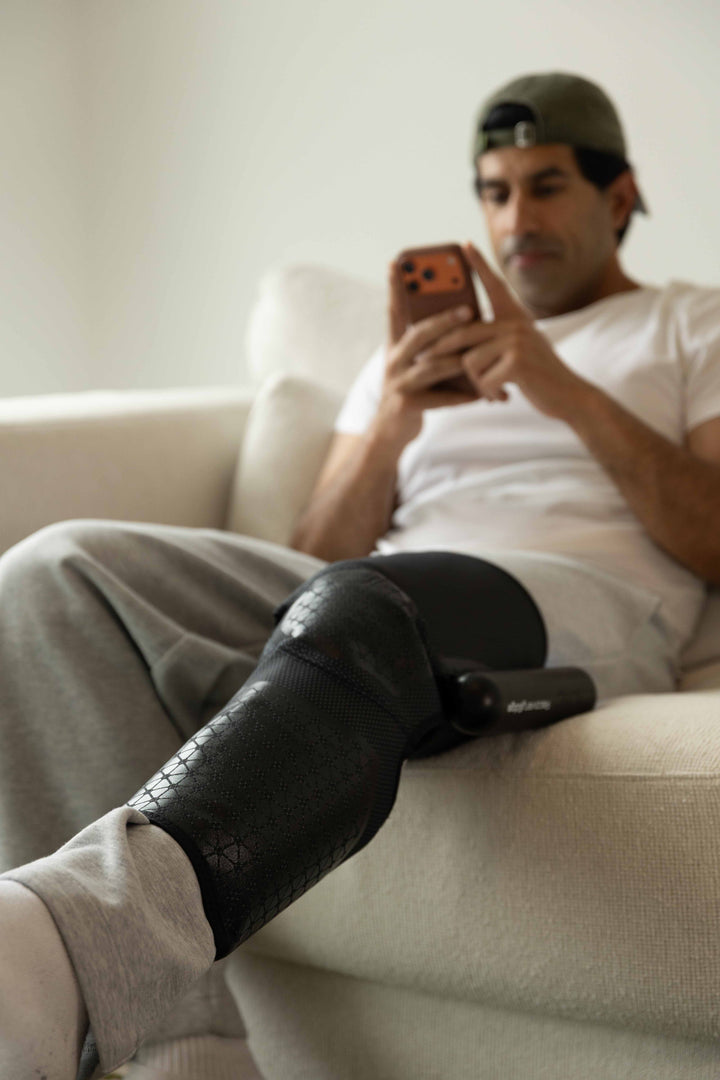
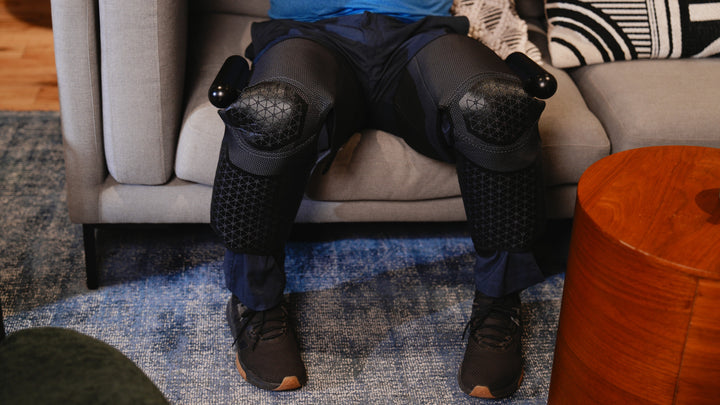
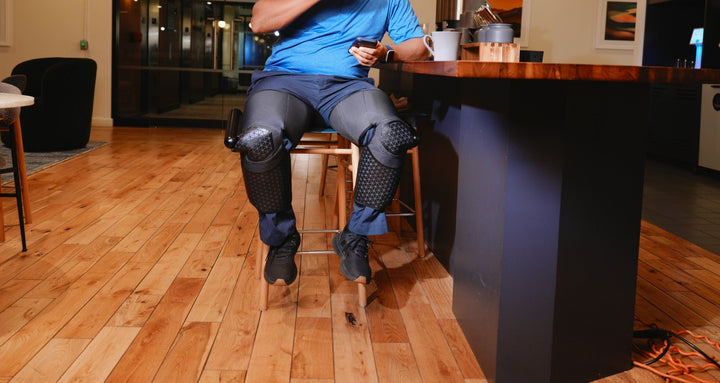
If you would like warmth without being tied to an outlet, The Stride Flow combines gentle, rhythmic compression for the thigh and calf with adjustable heat at the knee in one cordless brace. The pump and controls are built in, the display shows three mode settings, and you get 2+ hours of use per charge over USB-C. Strap it on at your desk or on the couch, pick a setting and let it run.
A simple routine for desk days
| When | What to try | Why it helps |
|---|---|---|
| Before you sit down | A few minutes of walking | Warms your legs up so you start the day loose |
| Every 30 to 60 minutes | Stand, walk, change position | Breaks up one long stretch in one bent position |
| At lunch | A short walk away from your desk | Gives your knees a proper change of scene |
| After work | A walk or light stretching | Helps you switch out of sitting mode |
| Evening | Warmth and gentle pressure with your feet up | A comfortable way to unwind tired knees |
When should I talk to a professional?
Stiffness after sitting is common, but some signs are worth checking out. Talk to a doctor or physical therapist if:
- The stiffness does not ease once you are up and moving
- You notice swelling, redness or warmth around the knee
- You have sharp pain, or pain that is getting worse
- Your knee clicks painfully, locks or feels as if it might give way
- You have had a recent injury or surgery
This is general information, not a diagnosis. A professional can tell you what is going on with your own knees.
Frequently asked questions
Is it normal for knees to feel stiff after sitting?
It is very common, especially after long stretches in one position, and it usually eases once you start moving. If it does not, or it comes with swelling or pain, ask a professional.
Can sitting too long cause knee pain?
Long, still stretches can leave knees feeling tight and uncomfortable. Moving more often is the simplest first step. Pain that lingers is worth checking out.
What is the best sitting position for my knees?
There is no single perfect position. The best one is the next one: change it often, keep your feet supported and avoid long stretches with your legs crossed.
Should I wear a knee brace at my desk?
Most people with everyday stiffness do not need a structural brace. If you have been advised to wear a support, follow that advice. For comfort, some people like warmth and gentle pressure while they work.
Can I wear The Stride Flow while I work?
Yes. It is cordless, with the pump and controls built in, so you can strap it on at your desk. Check the quick start guide in the box for how to use it.
How often should I get up if I sit all day?
There is no magic number. Many people set a reminder to stand or shift position every hour or so, as in the routine above. If stiffness is constant or comes with swelling or pain, ask a doctor or physical therapist.
What people ask next
- My knees feel worn out after a long day on my feet. What can I do tonight?
- Where can I use a knee recovery wrap? Ideas for a busy week
- More questions about The Stride Flow, answered
Good to know: This article is general wellness information, not medical advice. The Stride Flow is a wellness and recovery product, not a medical device, and it was developed with a licensed physiotherapist. If you have a knee injury, recent surgery or a medical condition, talk to your doctor or physical therapist before use.
Keep reading
 Buying guide
Cordless knee massager with heat and compression: what to look for before you buy
Shopping for a cordless knee massager with heat and compression? Eight things to check on any listing, from real battery run time and charging to fit,...
 Comparison
Knee sleeve vs knee brace vs heated knee wrap: what is the difference?
"What is the difference between a knee sleeve, a knee brace and a heated knee wrap?" A plain-English comparison of five common options, what each one...
 Busy weeks
Where can I use a knee recovery wrap? Ideas for fitting recovery into a busy week
"Where should I use it, and when? I barely have time." Nine ideas for fitting knee recovery into a busy week, plus a sample weekly plan...
